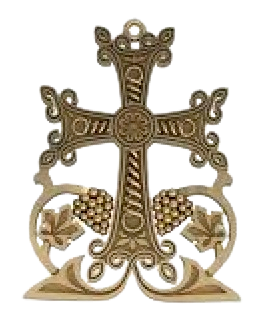

Baptism is the first of the seven sacraments of the Armenian Holy Apostolic Church. Through this sacred mystery, a person begins his or her life in Christ and becomes a member of the Church. For this reason, Baptism is often called the “Door to Christianity.”
Through Baptism, a person is cleansed of the original sin inherited from Adam and Eve and is united with Christ. The service symbolizes Christ’s death, burial, and resurrection. The individual is immersed in sanctified water three times in the name of the Father, the Son, and the Holy Spirit, symbolizes the three days Christ lay in the tomb before His glorious Resurrection.
Read more
The ceremony of immersion is accompanied by the following prayer: “This servant of God, coming from the state of catechumen to baptism, is being baptized in the name of the Father and the Son and the Holy Spirit and, being expiated by the blood of Christ from the captivity of sin, receives the adoption of the Heavenly Father, becoming co-heir with Christ and a temple for the Holy Spirit.”
In the Armenian Apostolic Church, the Baptismal service includes three sacraments celebrated together: Baptism, Confirmation (Chrismation), and Holy Communion (Holy Eucharist). Because Baptism is the first sacrament, it is the foundation of the Christian life and the gateway to all the other sacraments of the Church.
This sacred event signifies many spiritual realities. Through Baptism, a person is forgiven of sin, born into a new life in Christ, welcomed into the universal Church, anointed with the gift of the Holy Spirit, and called to renounce sin and live a life of faith, love, and service to God.
Our Lord Jesus Christ Himself was baptized by St. John the Baptist, not because He needed repentance, but to sanctify the waters of Baptism and reveal Himself as the beloved Son of God, the promised Messiah, and the Lamb of God who takes away the sins of the world (Matthew 3; Mark 1; Luke 3; John 1). Christ also taught that “unless one is born of water and the Spirit, he cannot enter the Kingdom of God” (John 3:5). Through Baptism, believers are united with Christ (Romans 6:3), receive the forgiveness of sins, and are granted the gift of the Holy Spirit (Acts 2:38).
During the service, the newly baptized is anointed with Holy Chrism (Muron), the sacred oil consecrated by the Catholicos of All Armenians in Holy Etchmadzin. These anointing seals the gift of the Holy Spirit and unites the newly baptized with the apostolic faith handed down through generations of the Armenian Church. At the conclusion of the service, the newly baptized receives Holy Communion, completing full initiation into the life of the Church.
According to the canons of the Armenian Church, infants should ideally be baptized on the eighth day after birth. In practice, parents are encouraged to baptize their child as soon as reasonably possible during the first months of life so that the child may begin sharing in the grace and blessings of the Christian life.
The godfather (sponsor) must be a baptized and practicing member of the Armenian Apostolic Church. Traditionally, the godfather should not be a blood relative, as this establishes a new spiritual relationship with the child. The godfather accepts the sacred responsibility of guiding the godchild in the Armenian Apostolic Orthodox Church faith and encouraging his or her spiritual growth throughout life.
“Truly, truly, I say to you, unless one is born of water and the Spirit, he cannot enter the kingdom of God”
John 3:5
Items To Be Provided By The Godparents
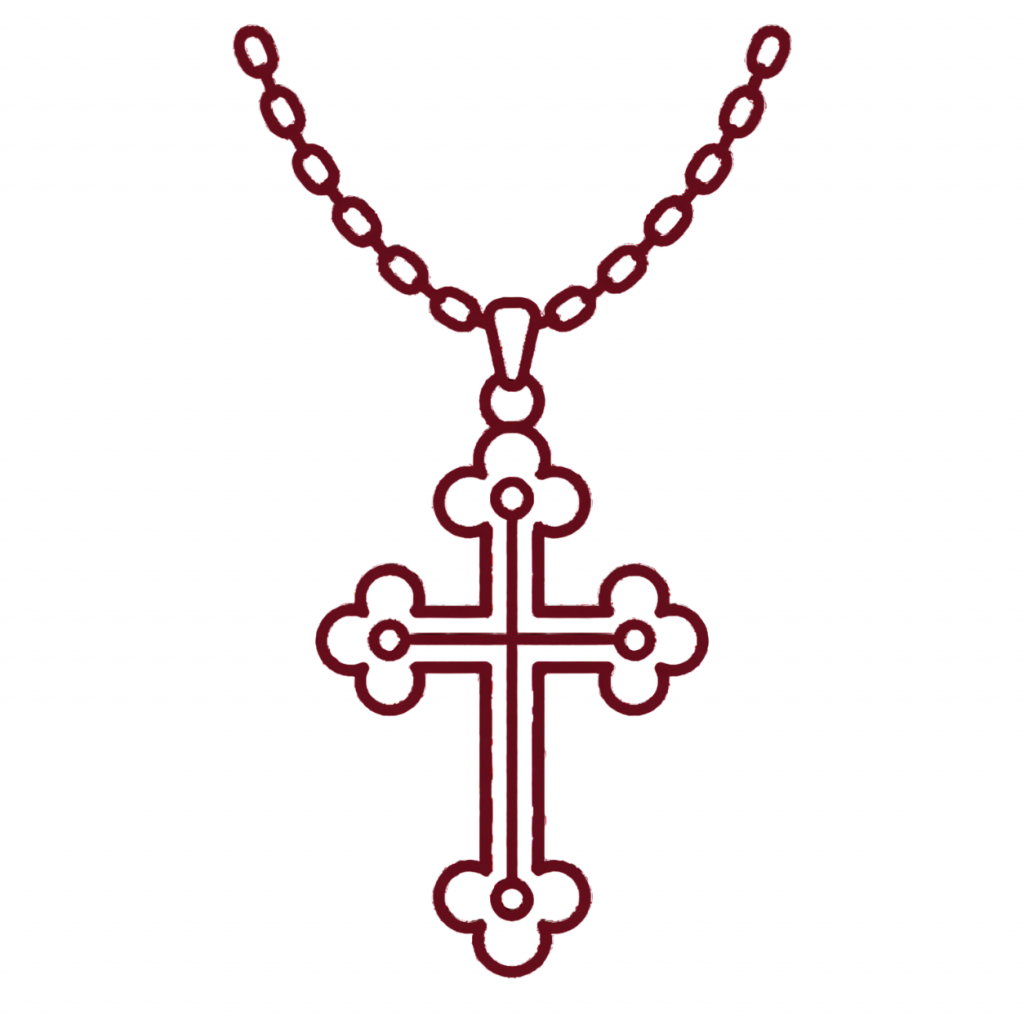
Cross & Chain
A chain and cross for the newly Baptized child. The cross must be Armenian in style. “Crucifix” style crosses are not part of the tradition of the Armenian Church.
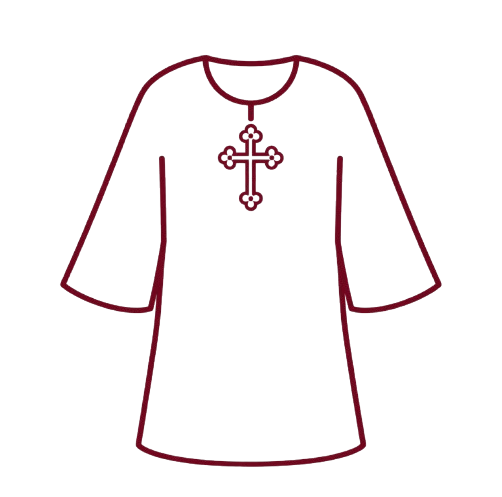
Robe Of Gladness
The “Robe of Gladness”—a white outfit to be worn after the Chrismation.
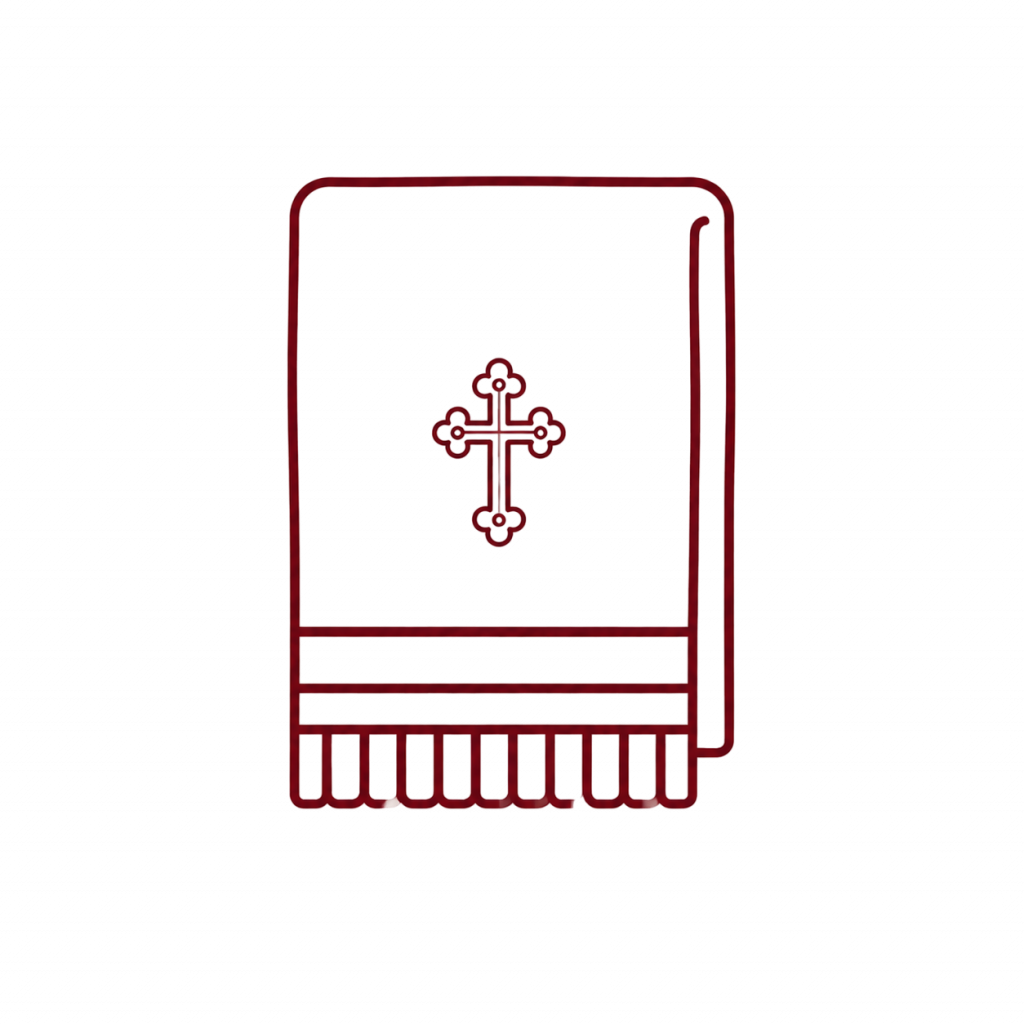
Large White Towel
One new large white towel not to be used for any other purpose.
Baptism Guidelines
- A date shall be set for baptism in joint consultation with the Pastor and arrangements must be made one month prior to the sacrament. The office will provide the parents with additional details and forms at that time.
- According to the Armenian Church canons, a Baptism may only be performed once in a person’s lifetime, provided such Baptism has been performed in a Christian Church and in the name of the Holy Trinity.
- The Pastor will meet with the parents and Godparents at least once, prior to the Baptism, to explain the Sacrament.
- Baptisms can take place on any day of the week. According to the canon, practice and tradition of the Armenian Church, the Sacrament should be administered anytime during the eighth to the fortieth day after the birth of a child. We do not recommend delaying or deferring the rite for a later time in order to safeguard the spiritual salvation of the child.
- The Godparents (Godfather and Godmother) of the child should be baptized and chrismated. Each child to be baptized will have only one Godmother and one Godfather.
- The Armenian Church has no explicit provisions for a Godmother at Baptism. We can consider a Godmother the person who takes care of the child during the performance of the Order of Baptism by holding the child during the ceremony, and dressing and undressing the child at the prescribed times.
- The Godparents at Baptism, like the parents, accept a responsibility in teaching and sharing the Faith with their Godchild. It is expected that they watch the spiritual growth and development of the child by their own Christian example, by education and full participation in the life of the Church and parish community.
- The full washing of the child is to be done at home on the third day after the Baptism preferably with Godparents present. The water used for the bath is not to be emptied down the drain but is to be collected and poured in the soil of a garden or lawn. The reason for this is that there may still be some Holy Muron left on the child’s body which were transferred into the water. Also, when the undergarments of the child are washed for the very first time after the Baptism, the water should be dispensed in the same manner.
- Photographs may be taken at any time during the ceremony. Caution should be used by the photographer (or videographer) not to blind the eyes of the Priest, Deacon or any other member of the baptismal party. At no time nor for any reason will the photographer ascend the steps of the Altar or be at the Altar itself.
How to Request a Baptism
For more information about Baptism or to request a baptism service, please contact the church. We will be pleased to answer your questions and assist you with the necessary arrangements.